

• Microplastics are plastics smaller than 5 millimeters, originating from the abrasion or fragmentation of larger plastic pieces.
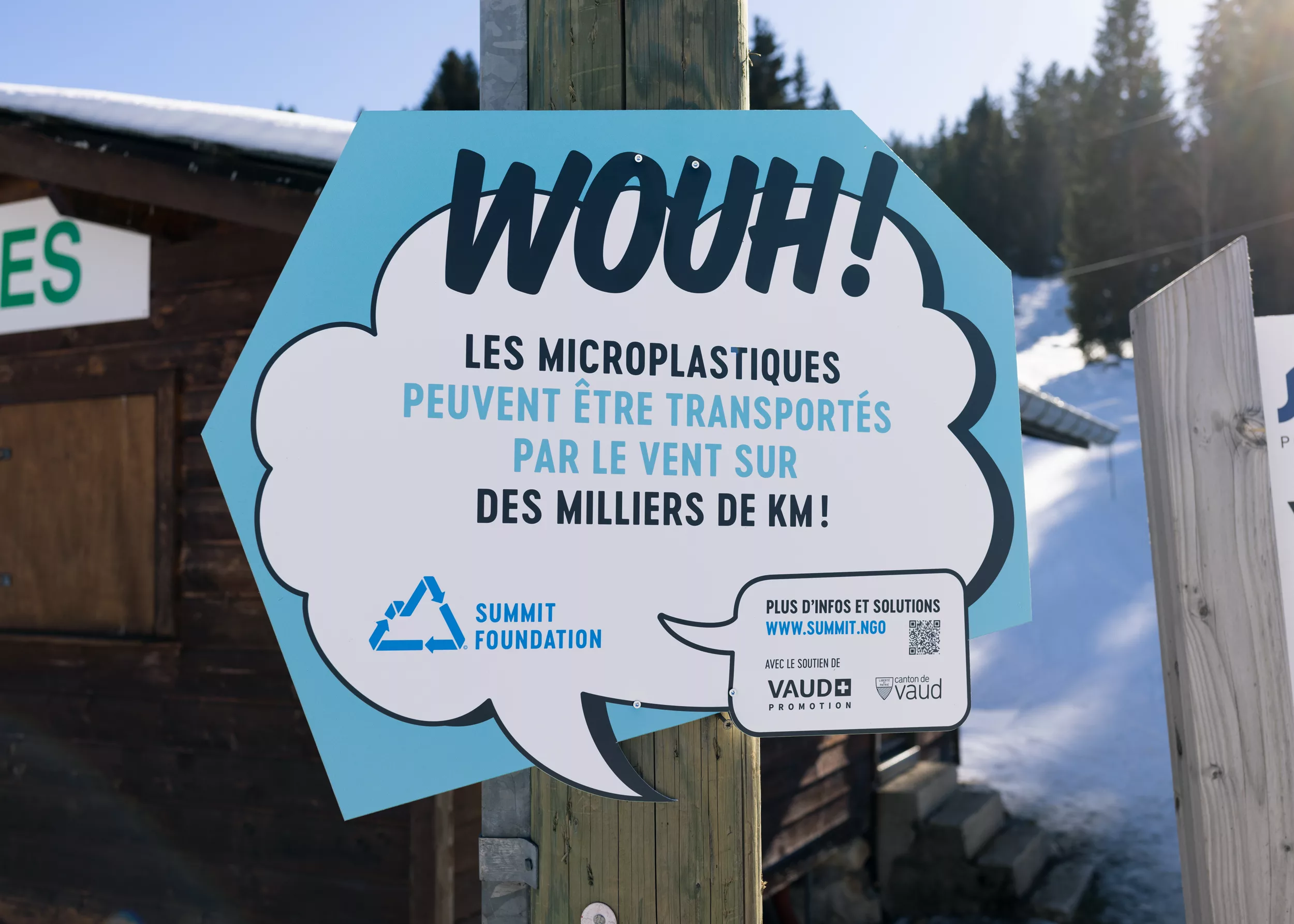
• Microplastics are ubiquitous in the environment and can be transported over thousands of kilometers.
• They carry pollutants, are toxic to wildlife, and can accelerate glacier melting.
Microplastics are plastic fragments ranging in size from 5 millimeters to 1 micrometer. Today, they are ubiquitous in the environment and represent a global concern.
They result from the fragmentation or abrasion of larger plastics (bottles, packaging, etc.) under the effects of UV radiation, mechanical forces, and animal or bacterial activity. The main sources of microplastics1 are: tire abrasion, littering (the abandonment of waste in nature), poor waste management, and plastic fibers released from our clothing. Released microplastics accumulate in water and soil.
Due to their small size and low mass, microplastics can be carried by the wind over thousands of kilometers2 and deposited in remote areas. The Clean Mont Blanc3 project, led by Summit Foundation, AQUALTI, and the University of Savoie Mont-Blanc, has documented their presence in 18 glacial streams of Mont-Blanc — far from any human activity.
This contamination is not insignificant and causes various environmental impacts:
So what can be done? At your level, certain behaviors can help reduce emissions:
Let’s adopt good habits and protect our environment from microplastics.