WORKING FOR
CLEANER MOUNTAINS

“Keep It Wool”: Wool in the service of glaciers
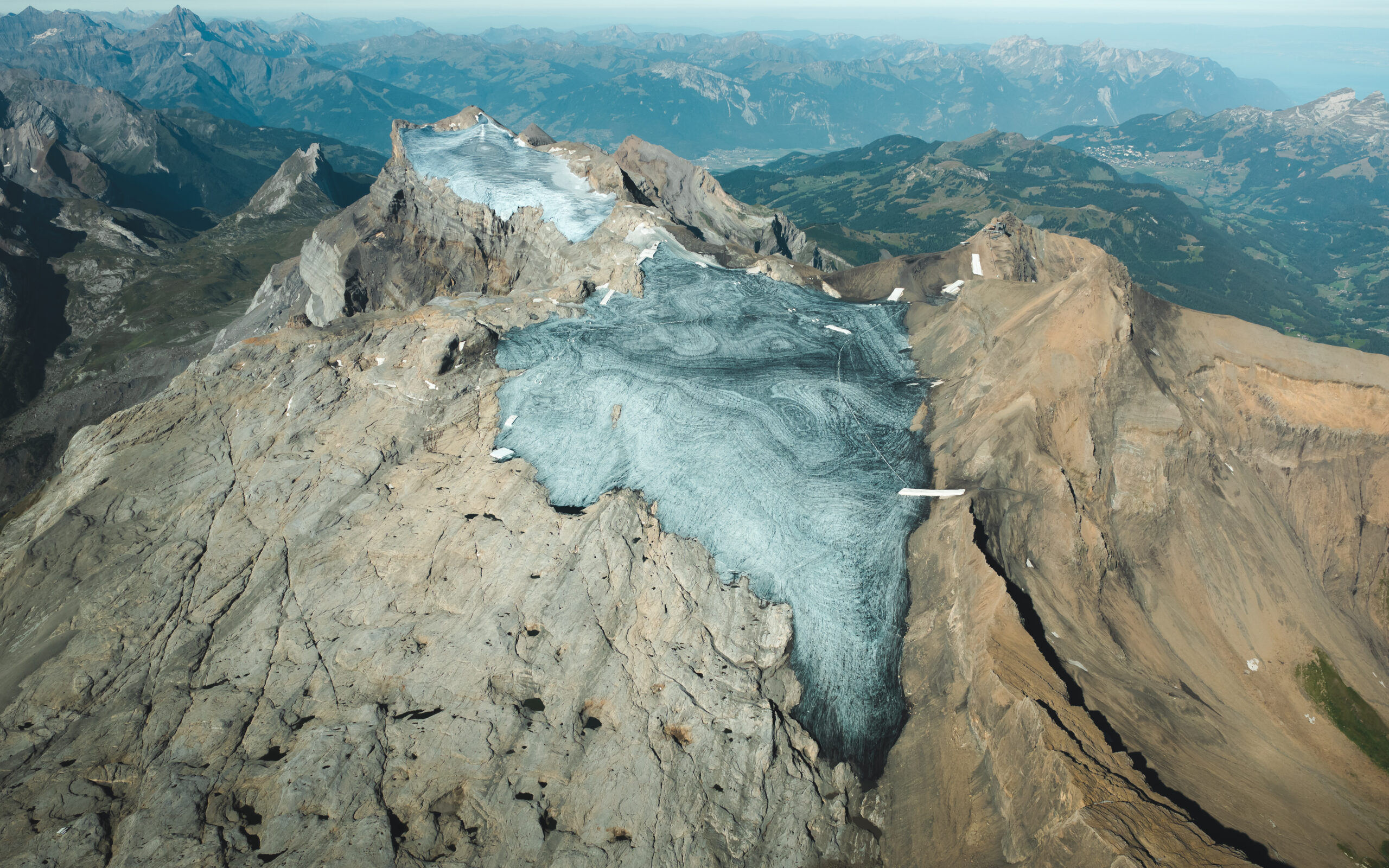
Between June and September 2026, two prototype wool covers were installed on the “Glacier 3000” in Les Diablerets. Conducted in collaboration with the University of Lausanne, the “Keep It Wool” project aims to determine whether this natural, locally sourced material could replace the synthetic covers sometimes used to slow glacier melt.

Two wool covers and one synthetic cover were installed to compare their effectiveness / Summit Foundation

On 22nd June 2026, following several months of research and preparation, two 10-by-10-metre wool cover prototypes, made in two different thicknesses, were installed on the “Glacier 3000” in Les Diablerets, in the canton of Vaud, Switzerland. To compare the results, a geotextile cover of the same size was installed alongside them.

Promising initial results

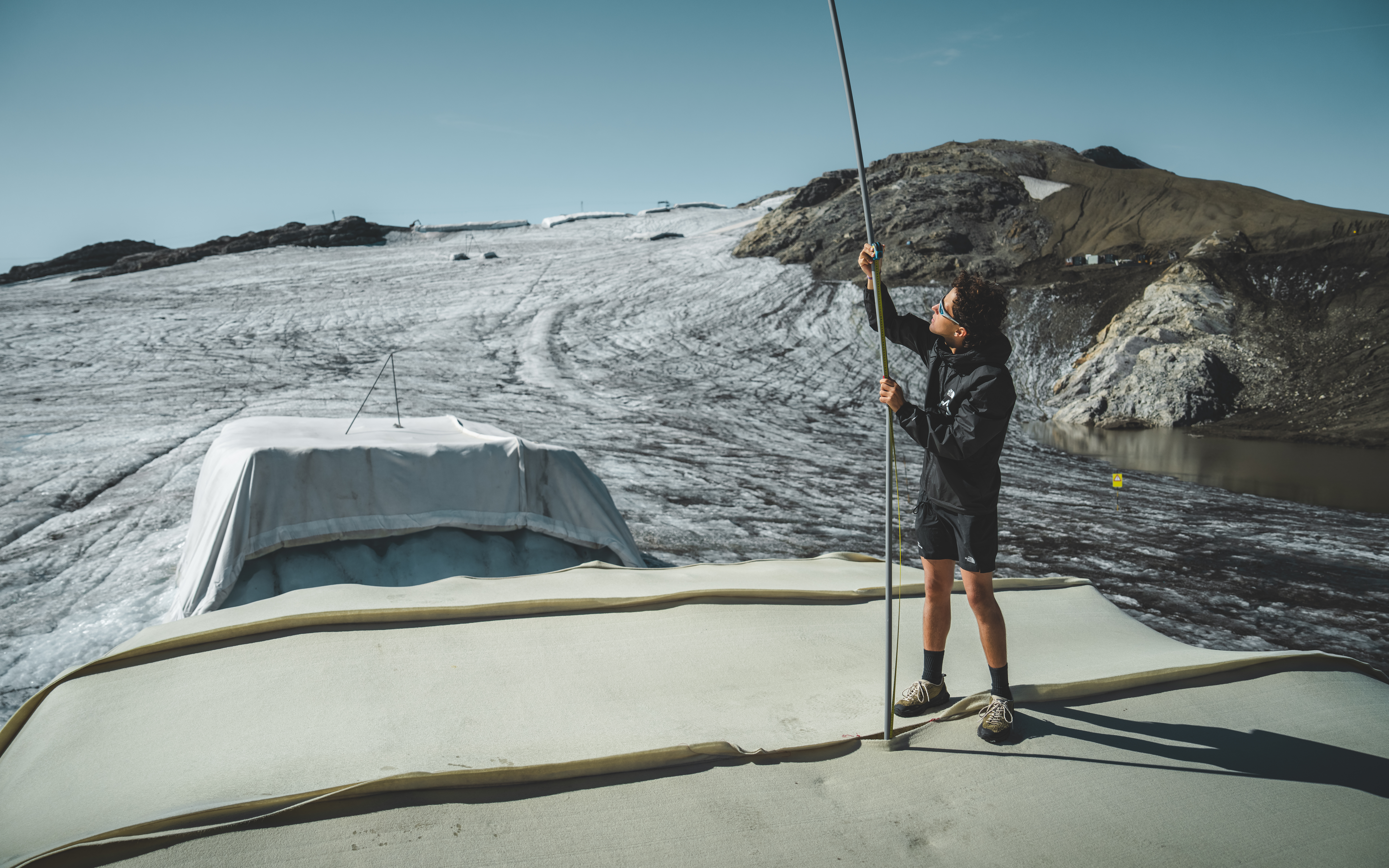
Measurements were taken every two weeks until September. The aim? To determine whether wool, a natural, biodegradable material produced in Switzerland, can withstand high-mountain conditions and whether its insulating properties help protect snow and ice from the effects of the sun. Stakes installed in the middle of the covered areas made it possible to monitor snow and ice melt.
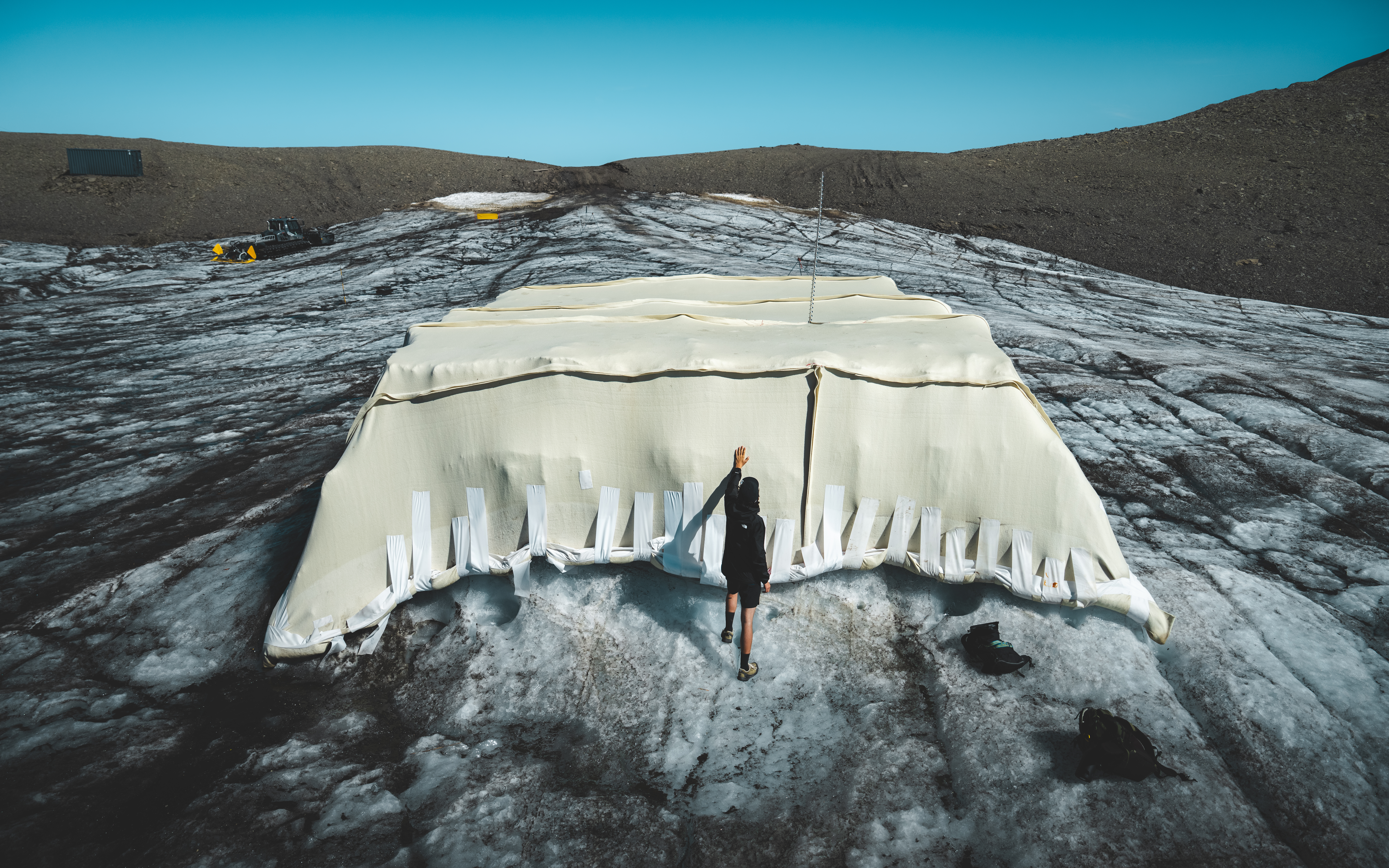
Here, the state of the covers as of mid-August 2026. The covers are weighed down using used malt bags filled with gravel. | Zimy Da Kid/Summit Foundation
After one summer, initial observations indicate that the two wool covers provide protection comparable to that of the conventional geotextile cover. The data collected still needs to be analysed.

Alternative to synthetic geotextiles

The idea for the project was inspired by an exhibition entitled “Glaciers Under Cover” and presented in Vevey in 2025 by Nathalie Dietschy, Professor of Art History at the University of Lausanne. The use of covers made from polyester or polypropylene was called into question. Under the effects of wind, precipitation and wear, fibres can gradually become detached.¹As they break down, they release microplastics that contaminate snow, ice and mountain waters. By entering the water cycle, these particles can make their way into the food chain.
The Foundation decided to explore the potential of sheep’s wool as a biodegradable alternative to synthetic geotextiles. This material is natural, renewable, biodegradable, locally produced and has insulating properties. Today, it is estimated that up to 70% of Swiss wool is destroyed.² , as sheep are primarily raised for their meat, milk and for maintaining green spaces.

A promising avenue, but not a miracle solution
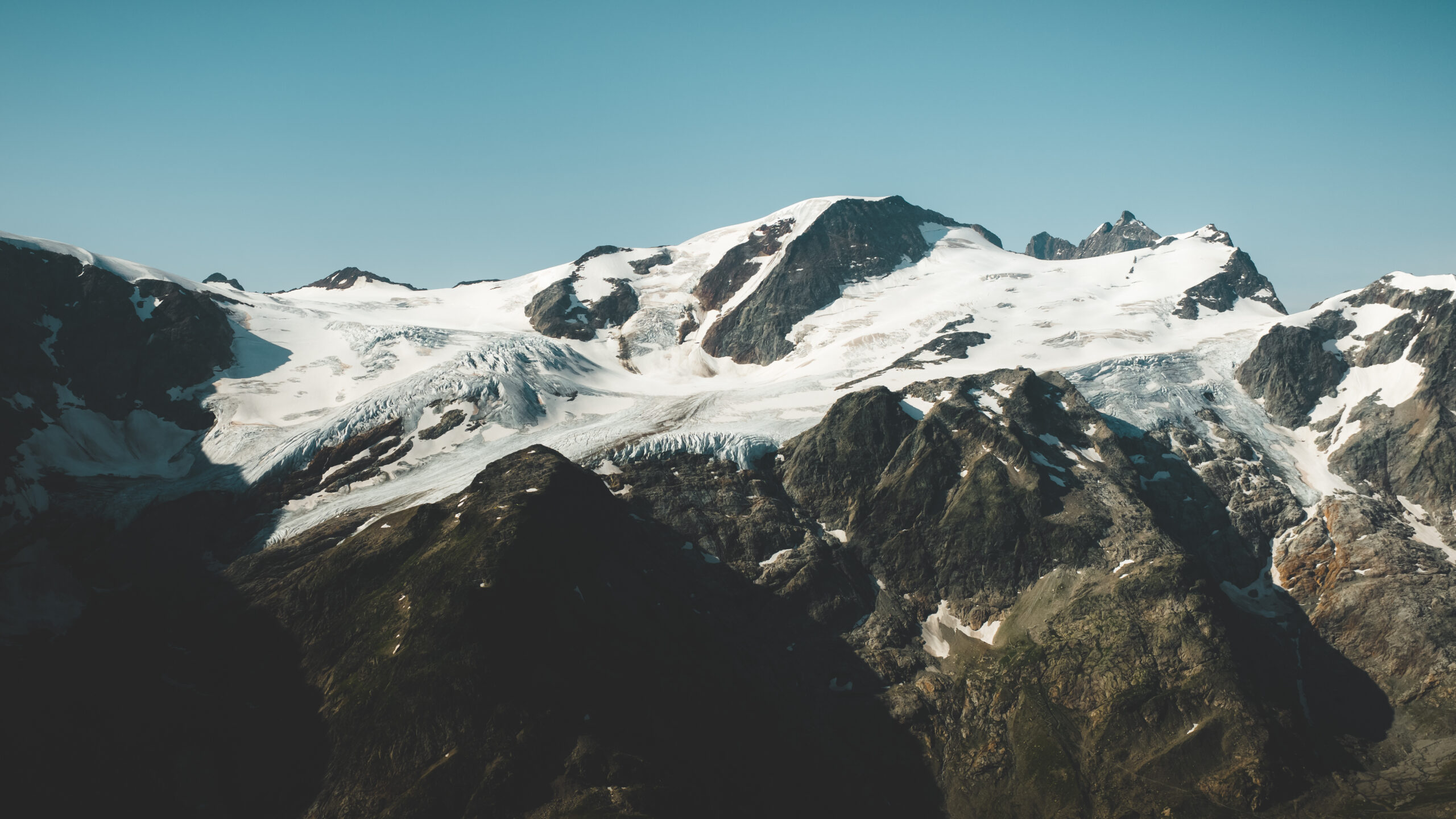
Over the past two decades, Swiss glaciers have lost nearly 40% of their mass.³, and nearly 1,000 small glaciers have already completely disappeared.Faced with this retreat, for around twenty years, certain areas of glaciers have been covered with geotextiles during the summer to locally slow down melting. By reflecting part of the solar radiation and limiting heat exchange, these covers help preserve more snow and ice.
The aim of the “Keep It Wool” project is clear: to use natural materials from local supply chains whenever glacier protection is necessary. Today, geotextiles cover around 0.02% of the surface area of Swiss glaciers and help preserve approximately 300,000 m³ of snow each year. This is little compared with the nearly one billion m³ of ice lost every year.
At Les Diablerets, snow farming, the practice of storing snow over the summer for use in winter, is already being carried out, as shown beneath the two large covers here. | Zimy Da Kid/Summit Foundation
Even on a large scale, this approach would not be enough to halt the gradual disappearance of glaciers caused by climate change. Reducing greenhouse gas emissions remains the main lever for limiting their long-term retreat.

Close-knit network of collaborations
Conducted in partnership with the Interdisciplinary Centre for Mountain Research (CIRM) at the University of Lausanne (UNIL), the project involved numerous collaborations: the “Association filature de l’Avançon” provided insight into the wool industry and helped establish contacts, the covers were produced by the company “Fisolan”, “Glacier 3000” hosted the experiment on its site, and researchers Mathias Huss and Mauro Fischer from “Glamos”, the Swiss Glacier Monitoring Network, provided scientific expertise. Many thanks to Innosuisse for its financial support of the project.

Many thanks to Maxime Galley, Elliot Gaffiot, Jose Bastidas and Léonard Duloube, Master’s students in Tourism and Geography for Mountain Territories and Environments at the University of Lausanne, who led the project and helped obtain these preliminary results.

Photo credit: Zimy Da Kid, Summit Foundation

SOURCES

  1. « Textile glacier protection », texpertisenetwork.messefrankfurt.com, 13 Februrary 2024.
  2. « How to prevent Swiss wool from going up in smoke », 24 Hours, 24 February 2024.
  3. « Glaciers: future and effects », naturalsciences.ch, accessed on 31 August 2026.
  4. « 1,000 Swiss glaciers already gone, and the melting is speeding up », sciencedaily.com, 1st october 2025.
  5. « Quantifying the overall effect of artificial glacier melt reduction in Switzerland, 2005–2019 », sciencedirect.com, april 2021.